
Foot reflexology · zone
Tooth — Right ear
Placement
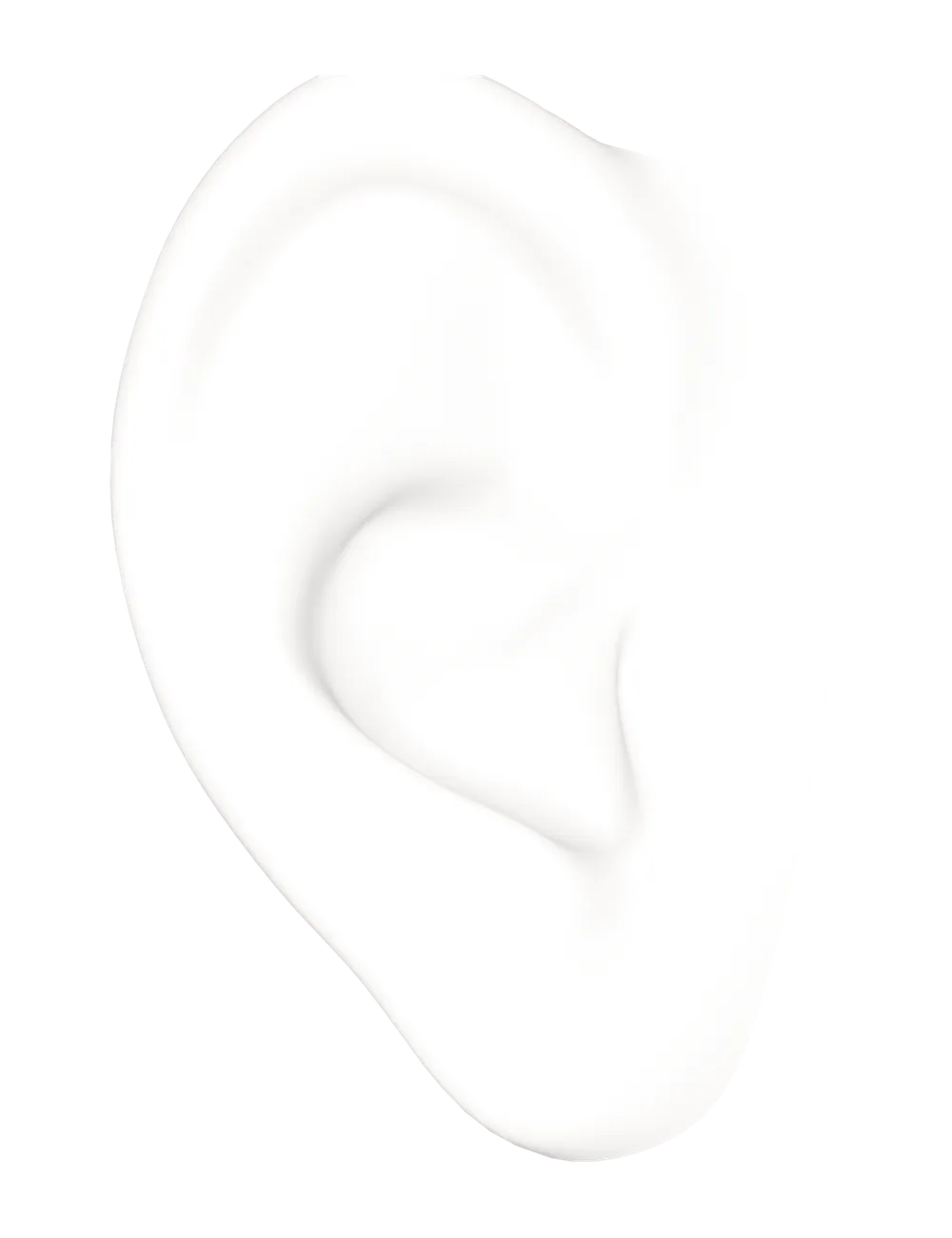
Location: On the lobule — the soft, cartilage-free lower part of the auricle. Dividing the lobule into nine areas by two horizontal and two vertical lines, this is the anterior area of the top row, just below the intertragic notch.
Longitudinal zone(s): of 5
Side: right ear
Tradition: WHO auricular nomenclature
Traditional use
The standard divides the lobule into a numbered grid; the anterior upper area carries the dental label in the Chinese chart tradition.
Reflexology is a traditional practice, not an evidence-based medical treatment. Systematic reviews have not shown it to be effective for any medical condition. These maps document what practitioners traditionally use — they are not claims about how the body works.
Care and caution
The lobule has no cartilage, so it tolerates pressure better than the rest of the ear, but it is also where seeds and studs are most often left too long. If ear seeds or press studs are used over this area they should be reviewed and removed on a normal schedule rather than left in place indefinitely, and the site checked for skin breakdown.
Frequently asked questions
Where is the tooth reflex area on the ear?
On the lobule — the soft, cartilage-free lower part of the auricle. Dividing the lobule into nine areas by two horizontal and two vertical lines, this is the anterior area of the top row, just below the intertragic notch.
Which tradition does this placement come from?
WHO auricular nomenclature. The major schools broadly agree on this placement.
Does pressing this area treat the organ it is named after?
No. Reflexology maps are traditional diagrams, not descriptions of anatomy or physiology. Systematic reviews have not found reflexology to be an effective treatment for any medical condition.
Is there anything to be careful about?
The lobule has no cartilage, so it tolerates pressure better than the rest of the ear, but it is also where seeds and studs are most often left too long. If ear seeds or press studs are used over this area they should be reviewed and removed on a normal schedule rather than left in place indefinitely, and the site checked for skin breakdown.
Sources
References displayed on this page were recorded with the point dataset.
- World Health Organization, Report of the Working Group on Auricular Acupuncture Nomenclature (Lyon, 1990) Standard anatomical nomenclature of the auricle and the standard auricular point list agreed by the WHO working group
- GB/T 13734, Nomenclature and Location of Auricular Points (Chinese national standard) Auricular point names and anatomical locations, by auricular subregion