
Hand reflexology
Hand Reflexology Chart — Every Area and Its Source
Hand reflexology borrows the same longitudinal zones as the foot but adapts them to a smaller, flatter surface, which is why it is popular for self-practice — you can work a hand point discreetly at a desk or in a waiting room. The trade-off is precision: areas that are well separated on the sole are crowded together on the palm, so schools disagree more often here than on the foot. The thumb carries the head and neck reflexes, the fingertips the sinuses, and the palm the abdominal organs. Contested placements are ringed below.
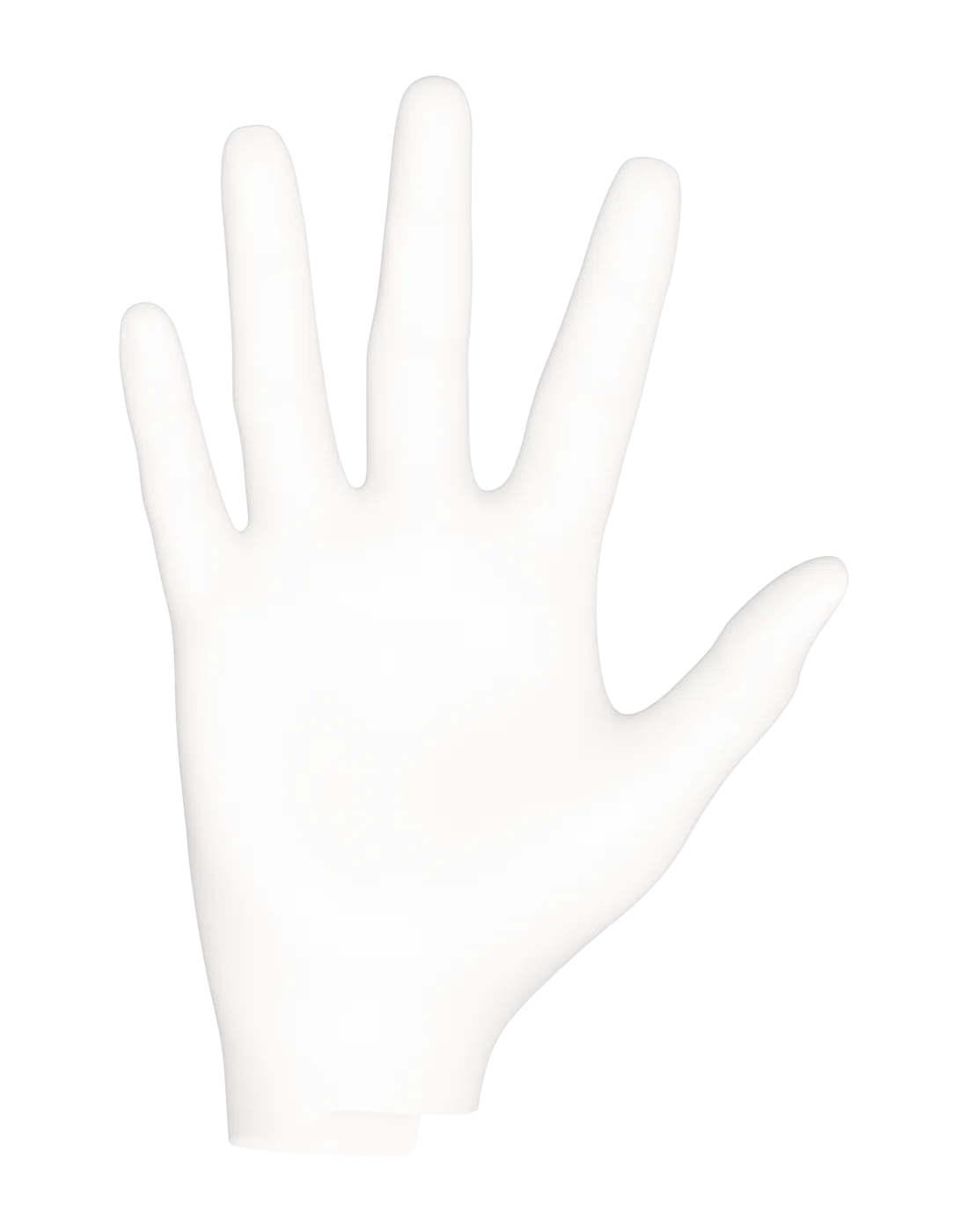
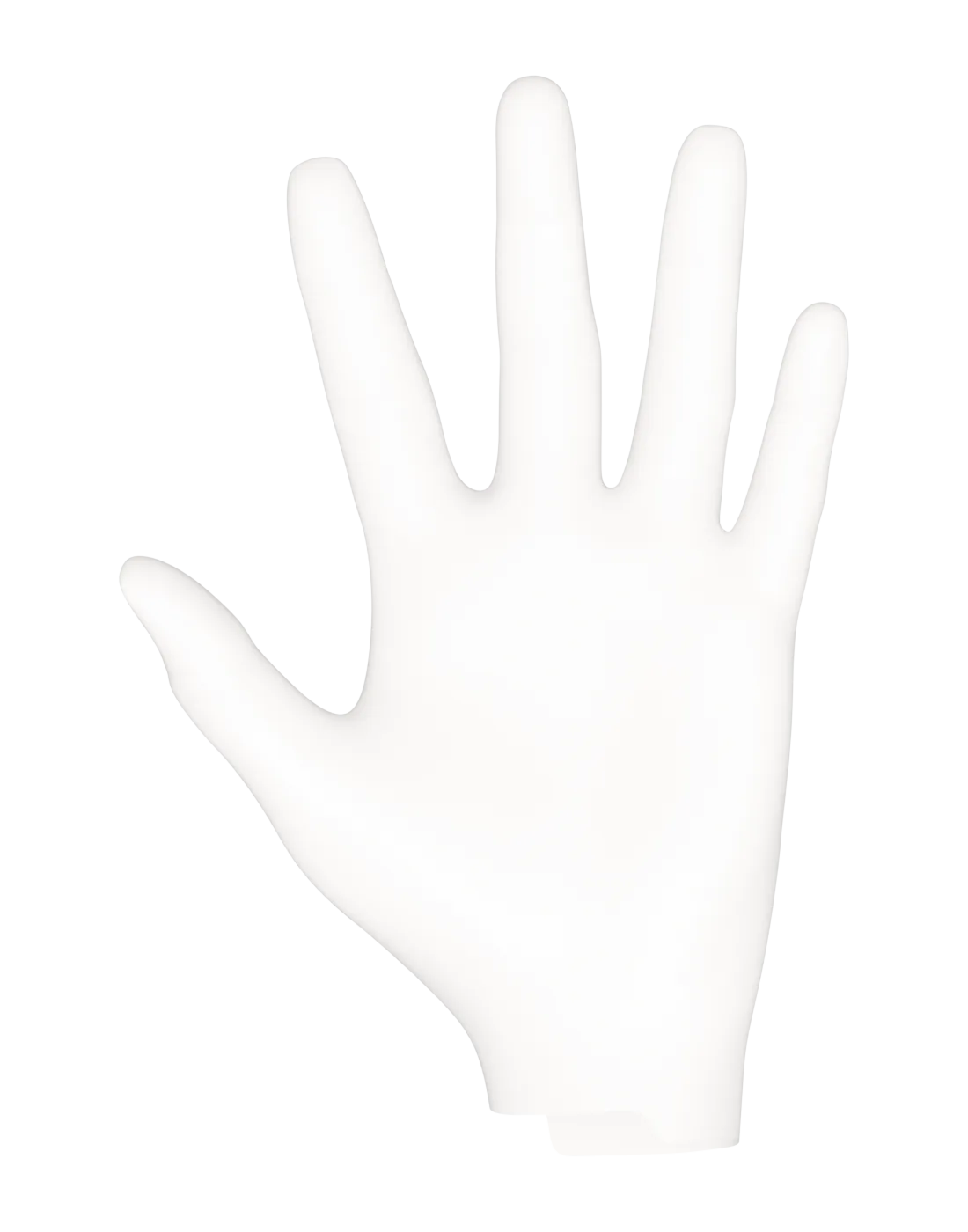
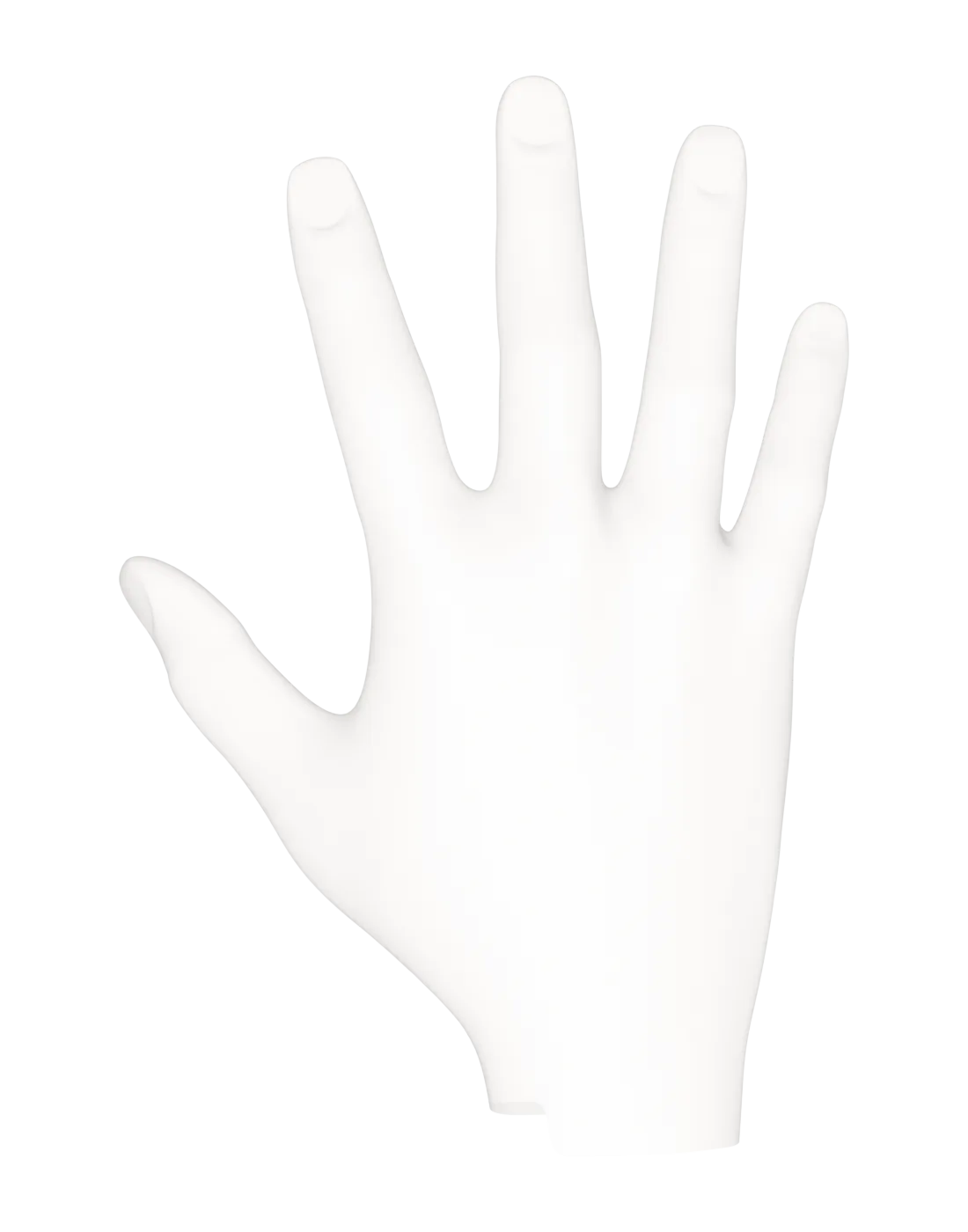
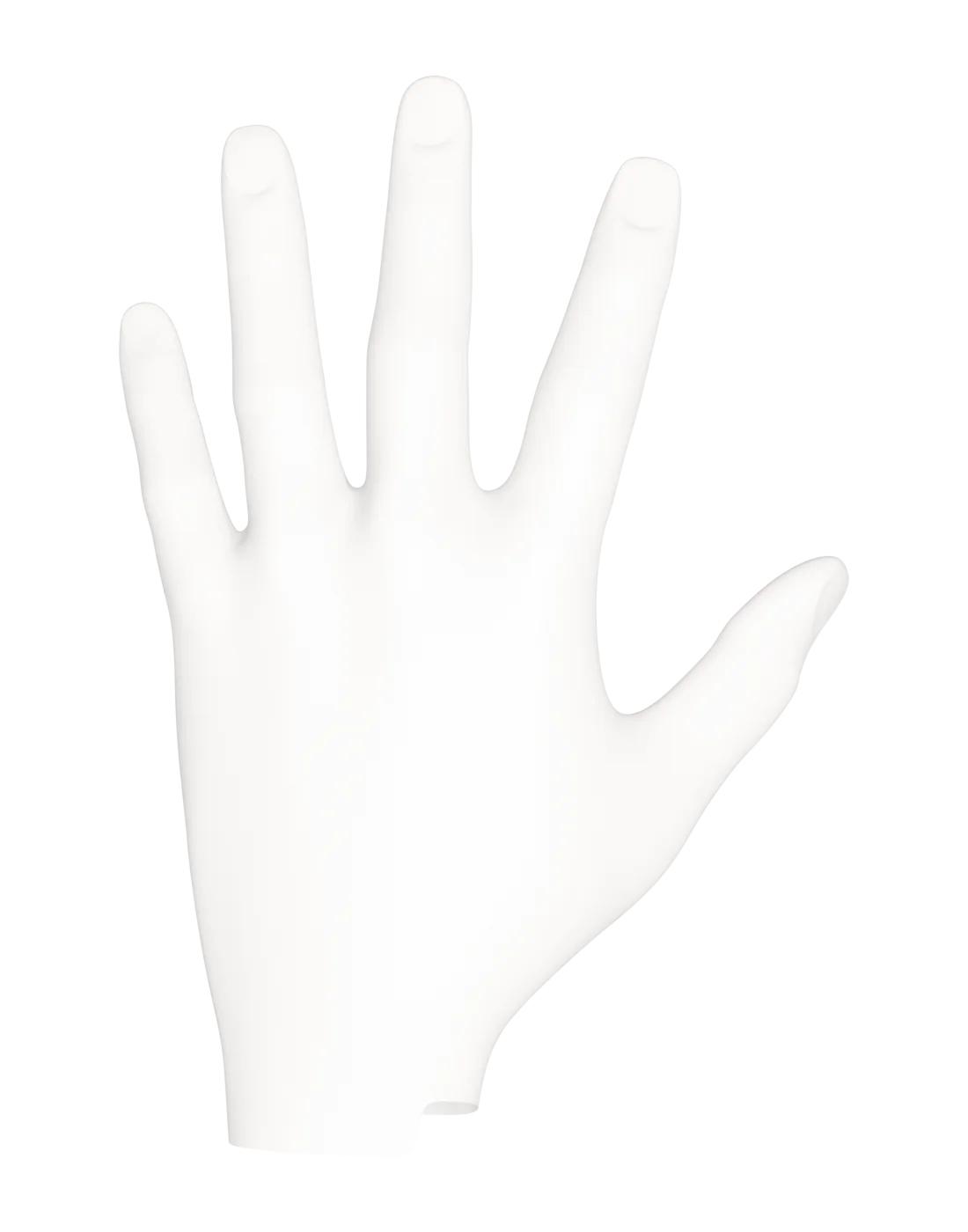
Drag to rotate · scroll to zoom · tap a marker to open it
Drag to rotate · scroll to zoom · tap a marker to open it
All areas
Frequently asked questions
How many reflex areas are on a hand chart?
This chart records 62 areas across both hands — 31 on the right and 31 on the left. Counts differ between published charts because reflexology has never been standardised.
Why do hand reflexology charts disagree with each other?
Because there is no standard. More than a hundred hand maps have been published since Eunice Ingham's charts in the 1930s, and they place several areas differently. This site shows the differences instead of hiding them.
Why are the two hands different?
Hand charts follow the same organ asymmetry as the body: liver and gallbladder are mapped on the right hand, heart and spleen on the left. Paired organs such as kidneys and lungs appear on both hands.
Is a hand chart the same as a foot chart?
The longitudinal-zone logic is shared, but the layout differs — the hand is smaller and flatter, so areas sit closer together and some placements that are clear on the foot are contested on the hand. Compare them on the foot chart.
Does hand reflexology work?
Reflexology is a traditional practice, not an evidence-based medical treatment. Systematic reviews have not shown it to be effective for any medical condition. These maps document what practitioners traditionally use — they are not claims about how the body works.