
Ingham (Western)
Ingham-lineage hand charts place hip and lower back on the ulnar border of the hand, below the little finger and toward the wrist.
Some charts in the same lineage add a knee area just distal to it on the same border.
Foot reflexology · zone 5
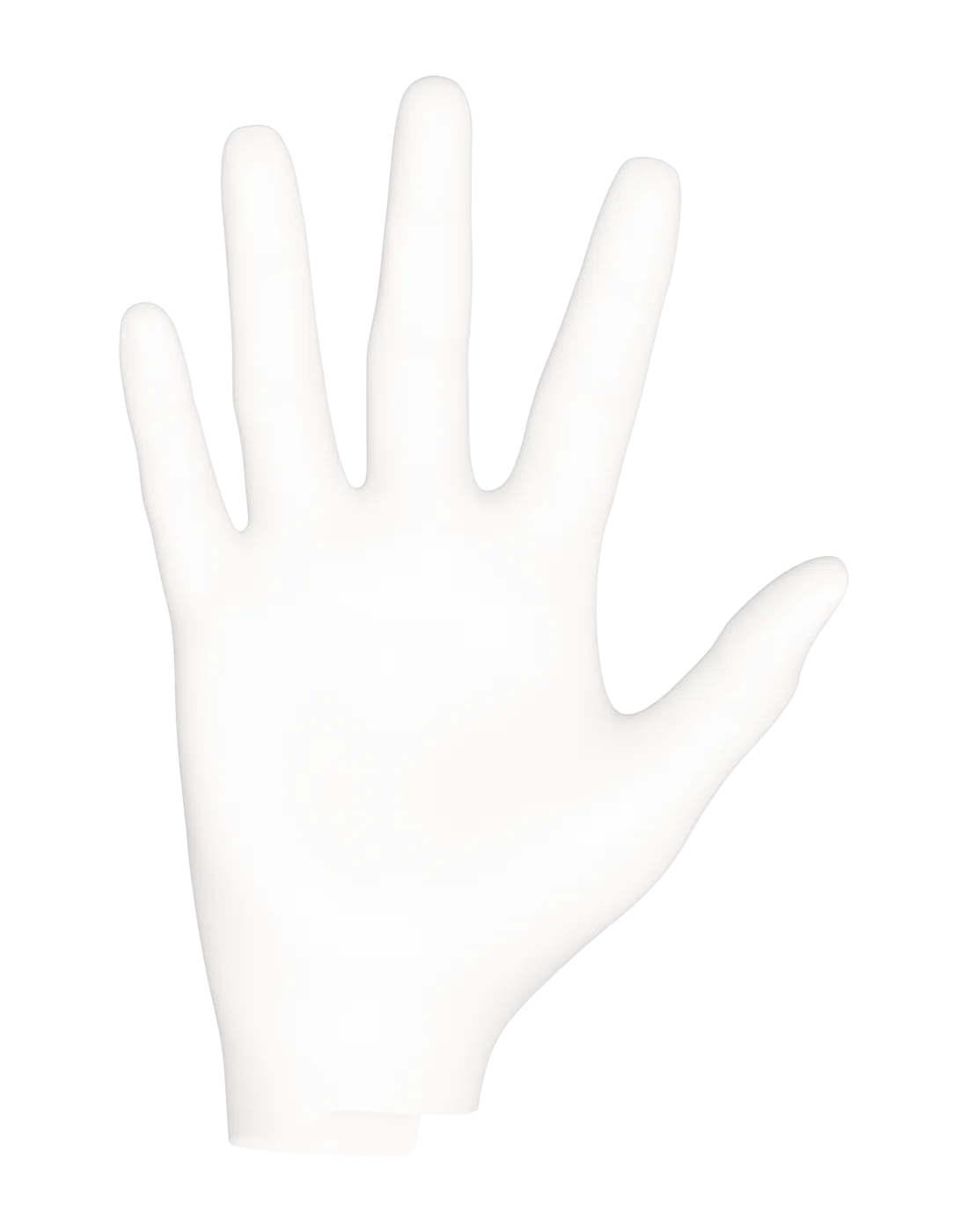
Location: On the ulnar (little-finger) border of the right hand below the hypothenar muscle, toward the wrist; pinned here at the outer border of the palmar chart, the aspect the chart actually names.
Longitudinal zone(s): 5 of 5
Side: right hand
Tradition: Ingham (Western)
Ingham (Western)
Ingham-lineage hand charts place hip and lower back on the ulnar border of the hand, below the little finger and toward the wrist.
Some charts in the same lineage add a knee area just distal to it on the same border.
Chinese reflexology
Chinese hand charts place the hip joint on the DORSUM of the hand near the ulnar side of the wrist, and add separate shoulder-, elbow- and knee-joint areas along the ulnar border.
Three different placements for the hip are therefore in circulation - palmar border, ulnar border and dorsum.
Traditionally worked in lower-limb and postural sequences with the supporting hand holding the wrist.
Reflexology is a traditional practice, not an evidence-based medical treatment. Systematic reviews have not shown it to be effective for any medical condition. These maps document what practitioners traditionally use — they are not claims about how the body works.
Conventionally avoided over recent injury, a joint replacement, swelling or unexplained pain in the corresponding joint.
On the ulnar (little-finger) border of the right hand below the hypothenar muscle, toward the wrist; pinned here at the outer border of the palmar chart, the aspect the chart actually names.
Ingham (Western). Other schools place this area differently; the variants are documented on this page.
No. Reflexology maps are traditional diagrams, not descriptions of anatomy or physiology. Systematic reviews have not found reflexology to be an effective treatment for any medical condition.
Conventionally avoided over recent injury, a joint replacement, swelling or unexplained pain in the corresponding joint.
References displayed on this page were recorded with the point dataset.