
Chinese reflexology
Chinese charts map the ear crosswise: the base of the fourth and fifth toes of the LEFT foot is worked for the RIGHT ear and vice versa.
Same crossover reasoning as for the eye area.
Foot reflexology · zone 4, 5
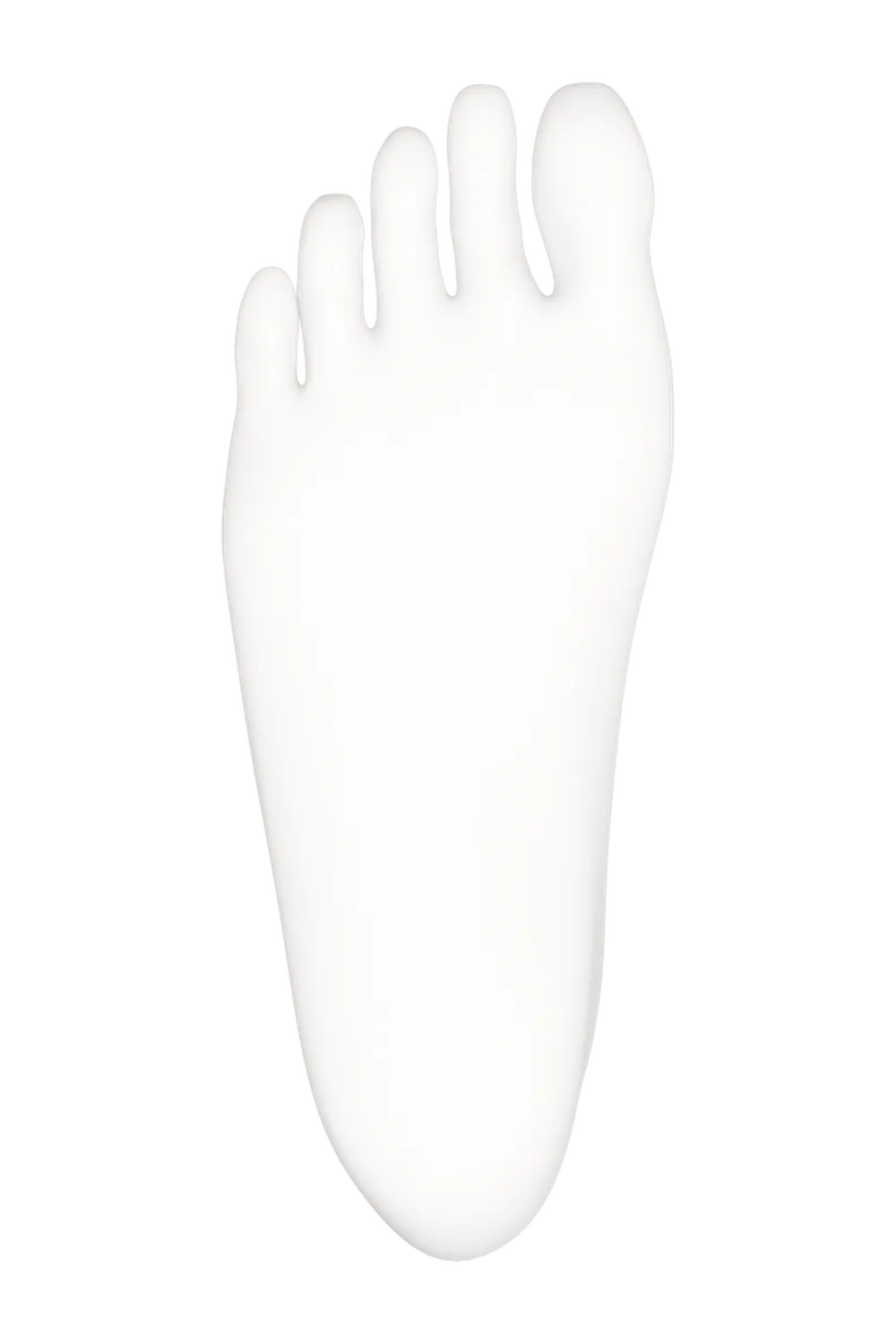
Location: At the base of the fourth and fifth toes of the right foot, on the plantar surface just below the toe ridge; the same same-side / opposite-side disagreement applies as for the eye.
Longitudinal zone(s): 4, 5 of 5
Side: right foot
Tradition: Shared across schools
Chinese reflexology
Chinese charts map the ear crosswise: the base of the fourth and fifth toes of the LEFT foot is worked for the RIGHT ear and vice versa.
Same crossover reasoning as for the eye area.
Ingham (Western)
Ingham-lineage charts keep the ear reflex on the same side as the ear, at the base of the fourth and fifth toes of that foot.
Charts also disagree on where the eustachian-tube area sits between the eye and ear areas.
Traditionally included in head-and-neck sequences, often together with a rotation of the small toes.
Reflexology is a traditional practice, not an evidence-based medical treatment. Systematic reviews have not shown it to be effective for any medical condition. These maps document what practitioners traditionally use — they are not claims about how the body works.
At the base of the fourth and fifth toes of the right foot, on the plantar surface just below the toe ridge; the same same-side / opposite-side disagreement applies as for the eye.
Shared across schools. Other schools place this area differently; the variants are documented on this page.
No. Reflexology maps are traditional diagrams, not descriptions of anatomy or physiology. Systematic reviews have not found reflexology to be an effective treatment for any medical condition.
References displayed on this page were recorded with the point dataset.