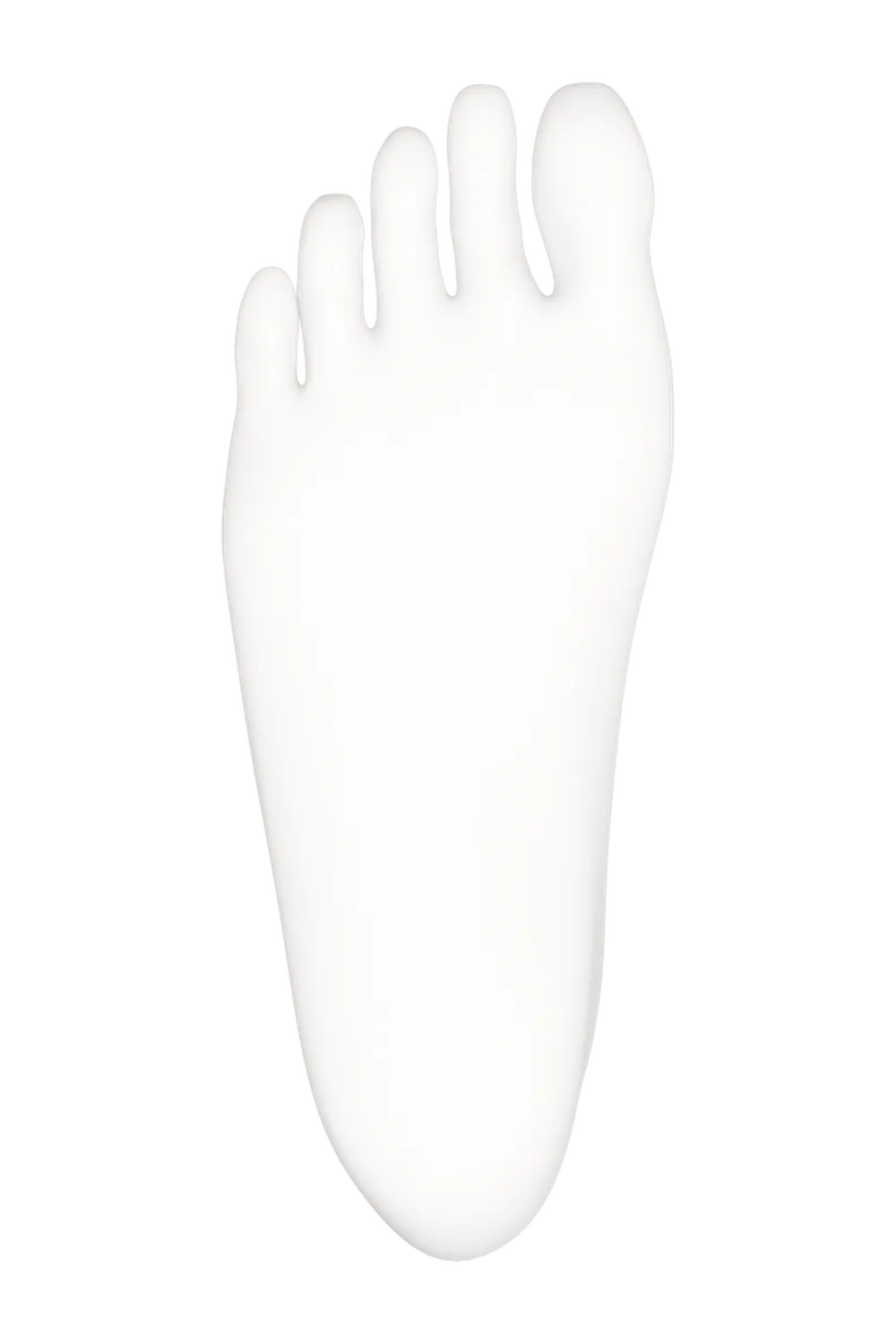
Head and brain on the right foot · 32 areas · ringed markers are placed differently by different schools
Placement
Location: On the plantar pad of the big toe. Every major school works the pad of the big toe as the head and brain area. The lineages differ over which side of the head it stands for: Ingham-lineage Western charts take each big toe to represent the SAME side of the head, while Chinese charts read the cerebral area crosswise, the left foot standing for the right side of the brain and the other way round - the same crossover those charts apply to the eye and ear areas.
Longitudinal zone(s): 1 of 5
Side: right foot
Tradition: Shared across schools
How other schools place it
Chinese reflexology
On the plantar pad of the big toe. Every major school works the pad of the big toe as the head and brain area. The lineages differ over which side of the head it stands for: Ingham-lineage Western charts take each big toe to represent the SAME side of the head, while Chinese charts read the cerebral area crosswise, the left foot standing for the right side of the brain and the other way round - the same crossover those charts apply to the eye and ear areas.
Denetim notu: Yukaridaki gerekce. El kayitlari (HAND-R-01/L-01) ayni cumleyi tasiyor ve el kayitlarinda goz/kulak capraz eslemesi zaten 'disputed' olarak isaretlenmis (HAND-R-05/06) - yani tutarsizlik elde de aynen var.
Traditional use
Traditionally the opening move of a head-and-neck sequence and part of most general relaxation routines.
Reflexology is a traditional practice, not an evidence-based medical treatment. Systematic reviews have not shown it to be effective for any medical condition. These maps document what practitioners traditionally use — they are not claims about how the body works.
Frequently asked questions
Where is the head and brain reflex area on the foot?+
On the plantar pad of the big toe. Every major school works the pad of the big toe as the head and brain area. The lineages differ over which side of the head it stands for: Ingham-lineage Western charts take each big toe to represent the SAME side of the head, while Chinese charts read the cerebral area crosswise, the left foot standing for the right side of the brain and the other way round - the same crossover those charts apply to the eye and ear areas.
Which tradition does this placement come from?+
Shared across schools. Other schools place this area differently; the variants are documented on this page.
Does pressing this area treat the organ it is named after?+
No. Reflexology maps are traditional diagrams, not descriptions of anatomy or physiology. Systematic reviews have not found reflexology to be an effective treatment for any medical condition.
Sources
References displayed on this page were recorded with the point dataset.